Thelocactus Species
Geometric Ribs. Wild Spines. Flowers That Overshadow the Plant.
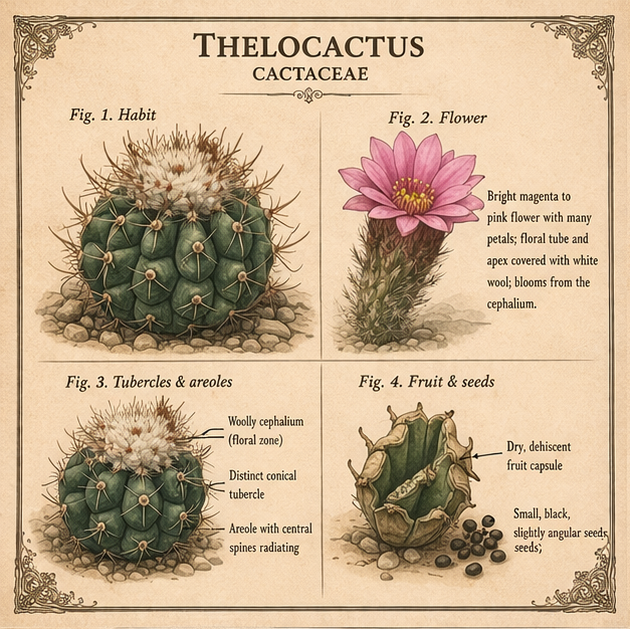
Grow a striking collection of North American desert cacti from seed. This Thelocactus Species Seed Mix produces compact cacti prized for their geometric ribs, prominent tubercles, ornamental spine patterns, and surprisingly large, colorful flowers. Native primarily to Mexico and extending into the southwestern United States, these slow-growing cacti combine rugged desert architecture with spectacular blooms—making them particularly rewarding for collectors.
Family: Cactaceae
Genus: Thelocactus
Native Range: Mexico & Southwestern United States
Growth Habit: Globular to short-cylindrical cactus
Light: Bright light to full sun as established
Water: Low once established
Growing Tips
• Use a mineral-rich, sharply draining cactus mix
• Provide bright, filtered light for young seedlings
• Gradually introduce stronger light as plants establish
• Mature plants prefer bright sunlight and dry conditions
• Maintain gentle moisture during early seedling growth
• Allow the growing medium to dry between waterings once established
• Excellent drainage and airflow are essential
• Avoid prolonged or excessive moisture
• Keep established plants considerably drier during cool winter conditions
• Expect relatively slow, steady growth as plants develop their mature form
Planting Tips
• Surface sow or cover seeds only very lightly
• Use a fine cactus seed-starting mix with added mineral grit
• Provide warm temperatures and gentle humidity during germination
• Keep the growing medium evenly moist during early germination, but never waterlogged
• Gradually increase ventilation after seedlings emerge
• Slowly introduce seedlings to stronger light and drier conditions
• Pot up once seedlings have developed firm bodies and established root systems
Interesting Facts
• Thelocactus species are especially prized for their striking spine formations and strongly sculpted bodies.
• Their pronounced tubercles and well-defined ribs can create impressive geometric patterns that become increasingly distinctive as plants mature.
• The name Thelocactus comes from Greek roots referring to a tubercle or nipple, describing one of the genus's characteristic structural features.
• Spines can be remarkably diverse and may develop as straight, curved, hooked, flattened, needle-like, or densely arranged formations.
• Spine coloration can range through white, gray, yellow, amber, red, reddish-brown, and darker tones, depending on the species and age of the growth.
• Many species grow primarily as solitary globular or short-cylindrical plants, although growth habit varies within the genus.
• Mature plants produce showy flowers near the crown that can appear remarkably large compared with the cactus body.
• Flowers may appear in shades of white, pink, magenta, purple, yellow, or combinations of these colors, often providing dramatic contrast against the spines.
• Their combination of slow growth, geometric structure, ornamental spination, compact form, and colorful blooms gives Thelocactus exceptional collector appeal.
Please Note
This is a mixed Thelocactus species seed assortment. Species, seed quantities, mature sizes, body forms, rib and tubercle patterns, spine colors, spine shapes, flower colors, and other characteristics may vary. Specific species and germination results are not guaranteed.
Built like a fortress. Blooms like it has something to prove. Geometric forms. Serious spines. Spectacular surprises.