Licorice
Sweet Roots. Ancient Tradition. A Botanical Classic Worth Growing.
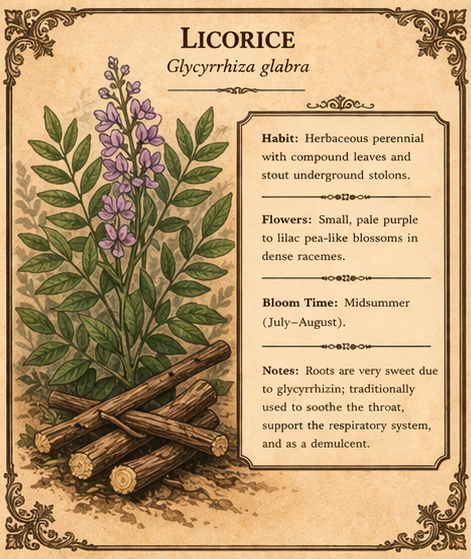
Licorice (Glycyrrhiza glabra) is a long-lived perennial herb famous for its naturally sweet roots and centuries of cultivation in traditional herb gardens. Native to parts of Europe and western Asia, licorice develops upright leafy stems above an extensive underground root system. This is the part of the plant responsible for its unmistakable sweetness and botanical history.
A fascinating addition to apothecary-inspired gardens, medicinal herb collections, and traditional botanical gardens.
Family: Fabaceae
Genus: Glycyrrhiza
Species: Glycyrrhiza glabra
Native Range: Europe & western Asia
Growth Habit: Upright, spreading perennial herb
Light: Full sun
Water: Moderate
Plant Care
• Plant in deep, well-drained soil with room for root development
• Provide full sun
• Water regularly while young and establishing
• Established plants develop an extensive root system
• Give plants plenty of room to spread
• Space approximately 24 inches apart
• Licorice is a long-growing perennial and requires patience before developing substantial roots
Germination Instructions
• Start seeds indoors for greater control over early growth
• Soaking or carefully scarifying the hard seed coat can help prepare seeds for germination
• Sow in a well-draining seed-starting mix
• Keep warm and consistently moist, but not waterlogged
• Provide bright light after seedlings emerge
• Maintain good airflow
• Harden seedlings off gradually before transplanting outdoors
• Transplant into a sunny location with deep, well-drained soil
Traditional Medicinal Uses
• Licorice root has a long history in traditional preparations associated with respiratory wellness
• Traditionally used in preparations associated with digestive comfort
• Historically incorporated into herbal preparations intended for general wellness
• Modern research has examined several naturally occurring compounds in licorice, but traditional use should not be interpreted as evidence that the plant prevents, treats, or cures disease
Interesting Facts
• Licorice root contains glycyrrhizin, a compound responsible for its remarkably intense sweetness.
• Glycyrrhizin can be many times sweeter than ordinary table sugar, which explains licorice root's long history as a natural sweetening ingredient.
• The botanical name Glycyrrhiza comes from Greek roots meaning “sweet root.”
• Licorice has been cultivated and used by several ancient cultures for culinary and traditional herbal purposes.
• Unlike many herbs grown primarily for their leaves or flowers, the famous portion of this plant develops underground.
• As a member of the Fabaceae, licorice belongs to the same botanical family as peas, beans, and many other legumes.
Please Note
Licorice is a long-term perennial crop, and substantial root development takes time.
Licorice root and concentrated licorice products are not appropriate for everyone. Excessive or prolonged consumption of glycyrrhizin-containing licorice can cause significant adverse effects and interact with certain medications.
Seeds are offered for cultivation. Historical and traditional-use information is provided for botanical and educational purposes only and is not medical advice.
Sweet root. Deep history. Definitely not your ordinary garden herb.